
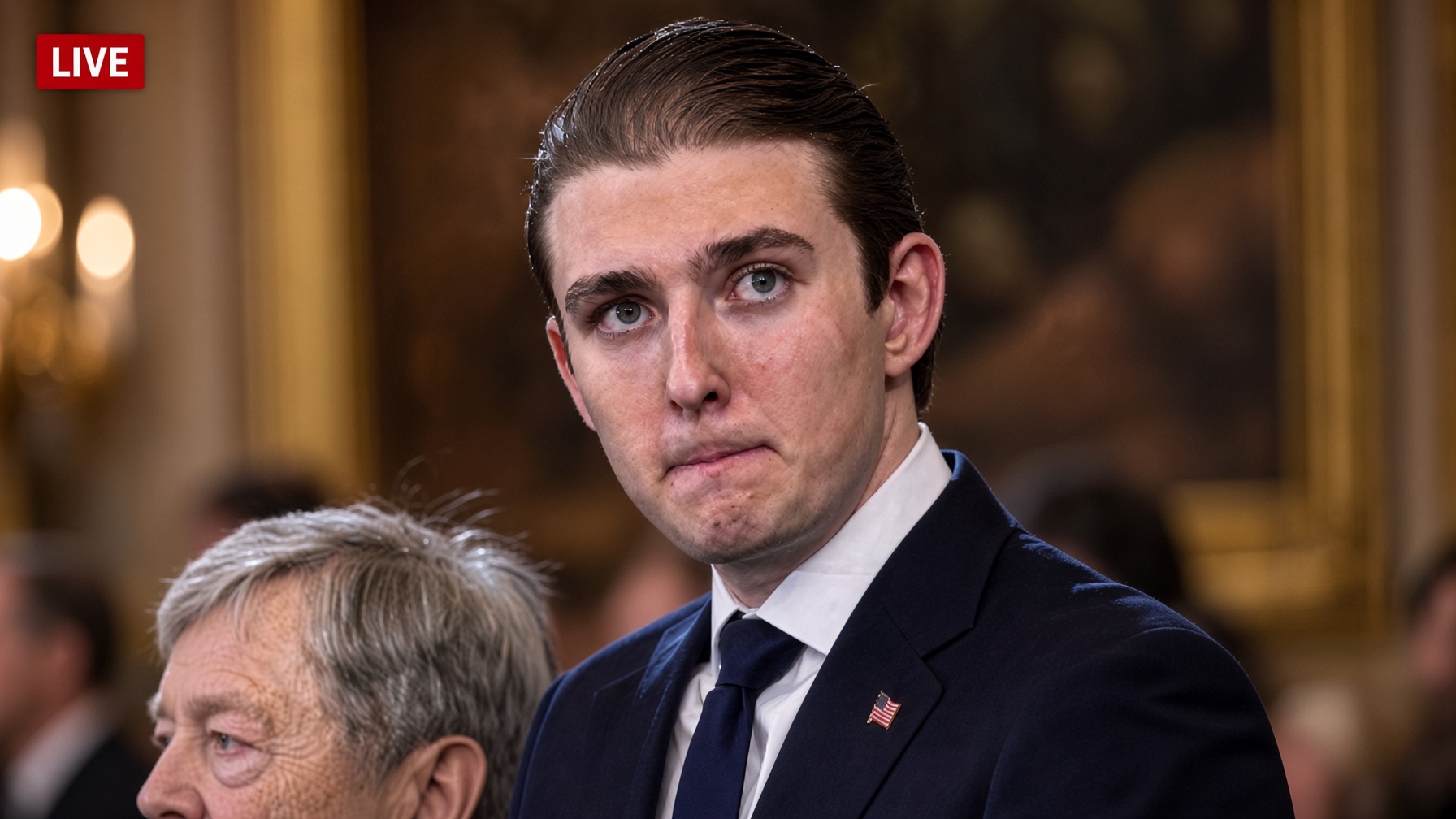
WASHINGTON — Alleged threats referencing President Donald Trump’s youngest son, Barron Trump, have intensified safety concerns surrounding the executive family as geopolitical tensions between Washington and Tehran remain sharply elevated.
Recent reports from foreign media outlets indicate that Iran-linked platforms circulated threatening digital material targeting the 20-year-old, including unverified claims regarding a $10 million bounty. While federal authorities have not independently validated every aspect of the online propaganda, the developments have prompted heightened vigilance across national security agencies.
The reported targeting of Barron follows a broader pattern of hostility aimed at immediate family members, including First Lady Melania Trump and the President himself. Security analysts note that the trend reflects a troubling shift in state-adjacent propaganda, moving past government officials to directly threaten non-political family members.
Escalating Rhetoric and Digital Threats
The recent activity follows a video previously distributed by Tasnim News Agency, an Iranian media entity affiliated with the Islamic Revolutionary Guard Corps (IRGC). The video contained violent scenarios and explicit references to locations associated with First Lady Melania Trump’s public appearances, concluding with direct menacing references to Barron.
Federal law enforcement and security entities have taken notice. The United States Secret Service, tasked with protecting the President and his immediate family, acknowledged awareness of the circulating content and confirmed that all potential threats against protectees undergo rigorous evaluation.
Protective Operations: The Secret Service maintains full-time security details for both Barron and Melania Trump.
Secured Facilities: Threat assessments extend to primary family residences and properties, including the White House, Mar-a-Lago in Florida, Trump Tower in New York, and the family’s Bedminster estate in New Jersey.
Operational Security: Citing long-standing protocol, official agencies have declined to disclose specific tactical adjustments, physical security enhancements, or investigative steps.
Psychological Warfare and Security Realities
The material arrives during an exceptionally volatile period in U.S.-Iran relations. President Trump has issued stern warnings against Iranian aggression, while state-aligned media in Tehran have escalated their retaliatory rhetoric.
Security experts emphasize that while state-sponsored digital campaigns often aim to intimidate, sow discord, and conduct psychological warfare, law enforcement cannot dismiss them as mere bluster. Distinguishing between general rhetoric and actionable intent remains a priority when evaluating high-profile protectees.
For Barron Trump, who has largely maintained a private lifestyle away from political campaigns and official government duties, the persistent targeted media presents a distinct security challenge. Security agencies are expected to maintain heightened surveillance over state-linked communication channels as long as diplomatic and military friction between the two nations persists.
For now, federal law enforcement officials maintain that protective measures remain fully active and confidential, urging the public to treat unverified online claims with caution while official investigations proceed.