
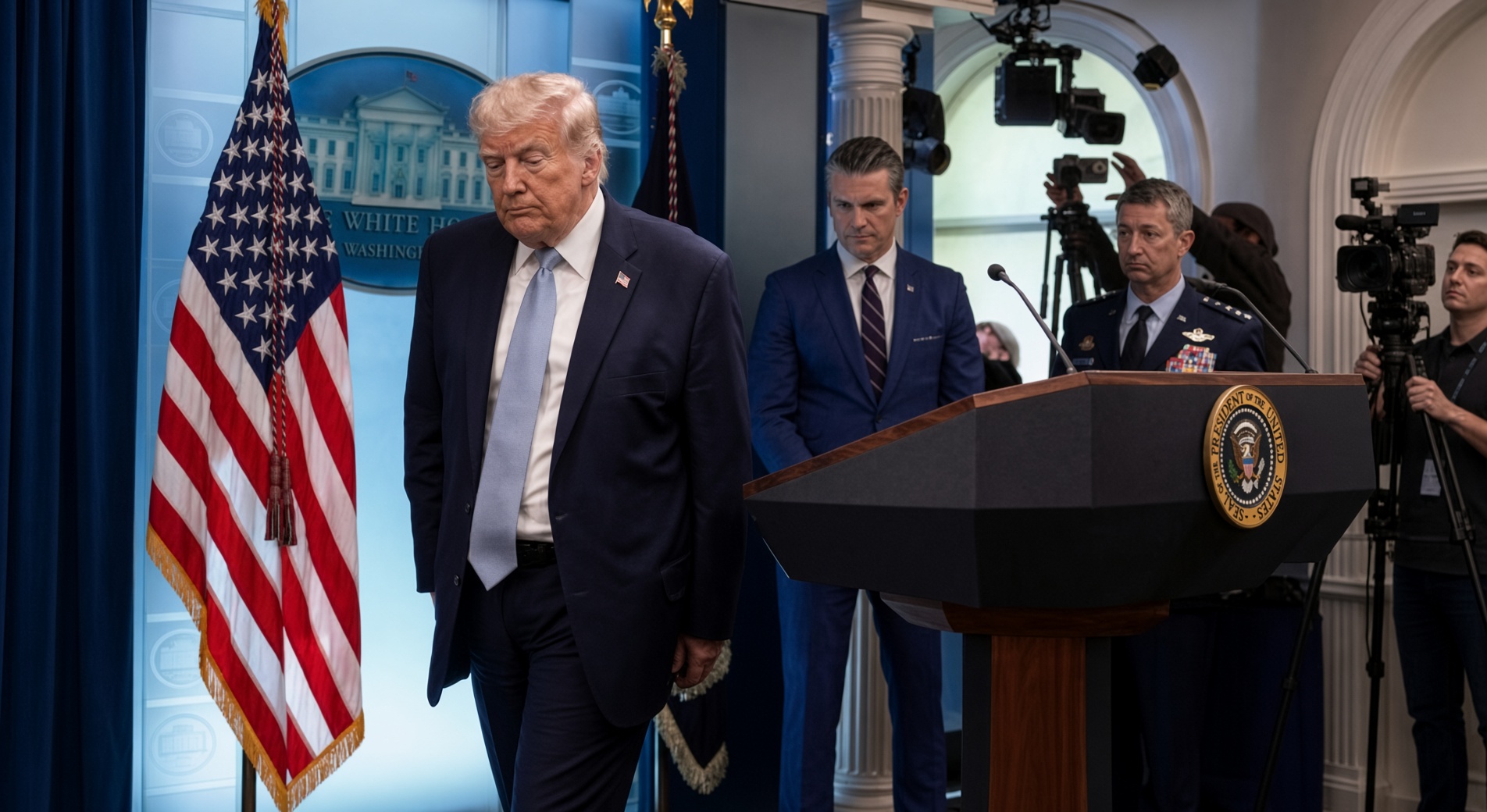
WASHINGTON — President Donald Trump issued a stark warning to Iran after the fragile ceasefire between Washington and Tehran came under renewed pressure following attacks involving commercial shipping in and around the Strait of Hormuz.
In a Truth Social post, Trump said the United States had carried out additional strikes against Iranian military targets after what U.S. officials described as further violations of the agreement. He warned that continued attacks could lead to a much broader American military response.
Trump said U.S. aircraft had struck Iranian missile and drone storage facilities as well as coastal radar sites, accusing Tehran of repeatedly violating the ceasefire. He warned that continued escalation could eventually result in the United States taking military action to “complete the job” it had begun.
Trump concluded his warning by saying that, if such action became necessary, the Islamic Republic of Iran could cease to exist.
U.S. Strikes Follow Attacks on Commercial Shipping
The warnings came after U.S. Central Command announced additional strikes against multiple targets inside Iran on June 27.
According to CENTCOM, the operation followed an attack involving the M/T Kiku, a Panama-flagged tanker carrying more than two million barrels of crude oil near the Strait of Hormuz. CENTCOM said an Iranian one-way attack drone struck the vessel at approximately 4:30 a.m. Eastern Time.
The incident followed an earlier attack on the M/V Ever Lovely, a Singapore-flagged commercial vessel that was struck by a drone while transiting near the Omani coast.
U.S. aircraft had already conducted strikes against Iranian missile and drone storage locations and coastal radar sites following the Ever Lovely incident, according to CENTCOM.
CENTCOM said the subsequent operation targeted Iranian military surveillance infrastructure, communications systems, air-defense sites, drone storage facilities and mine-laying capabilities.
The military described the actions as a direct response to continued attacks against commercial shipping.
Fragile Ceasefire Faces New Pressure
The developments have raised questions about the durability of the agreement reached between the United States and Iran.
The June 17 memorandum of understanding called for an immediate and permanent termination of military operations and established a maximum 60-day period for negotiations toward a broader final agreement. The document also called for Iran to make its best efforts to facilitate the safe passage of commercial vessels through the Strait of Hormuz for 60 days.
The waterway is a critical international shipping route, making attacks involving commercial vessels particularly significant for global energy markets and maritime security.
Following the attacks, U.S. officials said American forces would continue supporting commercial shipping through the strait while monitoring compliance with the agreement.
Attention Turns to Energy Markets
The confrontation has also remained closely connected to oil prices and global energy supplies.
The Strait of Hormuz is one of the world’s most important energy corridors, and disruptions there can affect the cost of crude oil, gasoline and other commodities.
Trump has repeatedly highlighted energy prices and the restoration of commercial traffic as important consequences of efforts to reduce the conflict.
The supplied report also cites a Daily Mail/JL Partners survey that measured Trump’s job approval at 47%, with 53% disapproving. The poll reported stronger approval than the firm’s earlier measurements, although polling results are measurements from a particular sample and period rather than evidence of a broader causal effect.
A Dangerous New Phase
The latest exchange of strikes has placed the U.S.-Iran agreement under significant pressure only days after it was established.
Washington says the attacks on commercial shipping constitute violations requiring a military response, while the broader agreement was intended to halt military operations and create space for negotiations.
The immediate challenge now is whether the ceasefire framework can survive further incidents in the Strait of Hormuz.
For the United States, the administration has made clear that continued attacks on commercial vessels and military interests could trigger additional strikes. For Iran, further confrontation risks another escalation after the two sides had formally committed to ending military operations.
With commercial traffic, energy markets and diplomatic negotiations all tied to the situation, the next developments in the Strait of Hormuz could determine whether the ceasefire becomes the foundation for a longer-term agreement or another stage in the continuing U.S.-Iran confrontation.