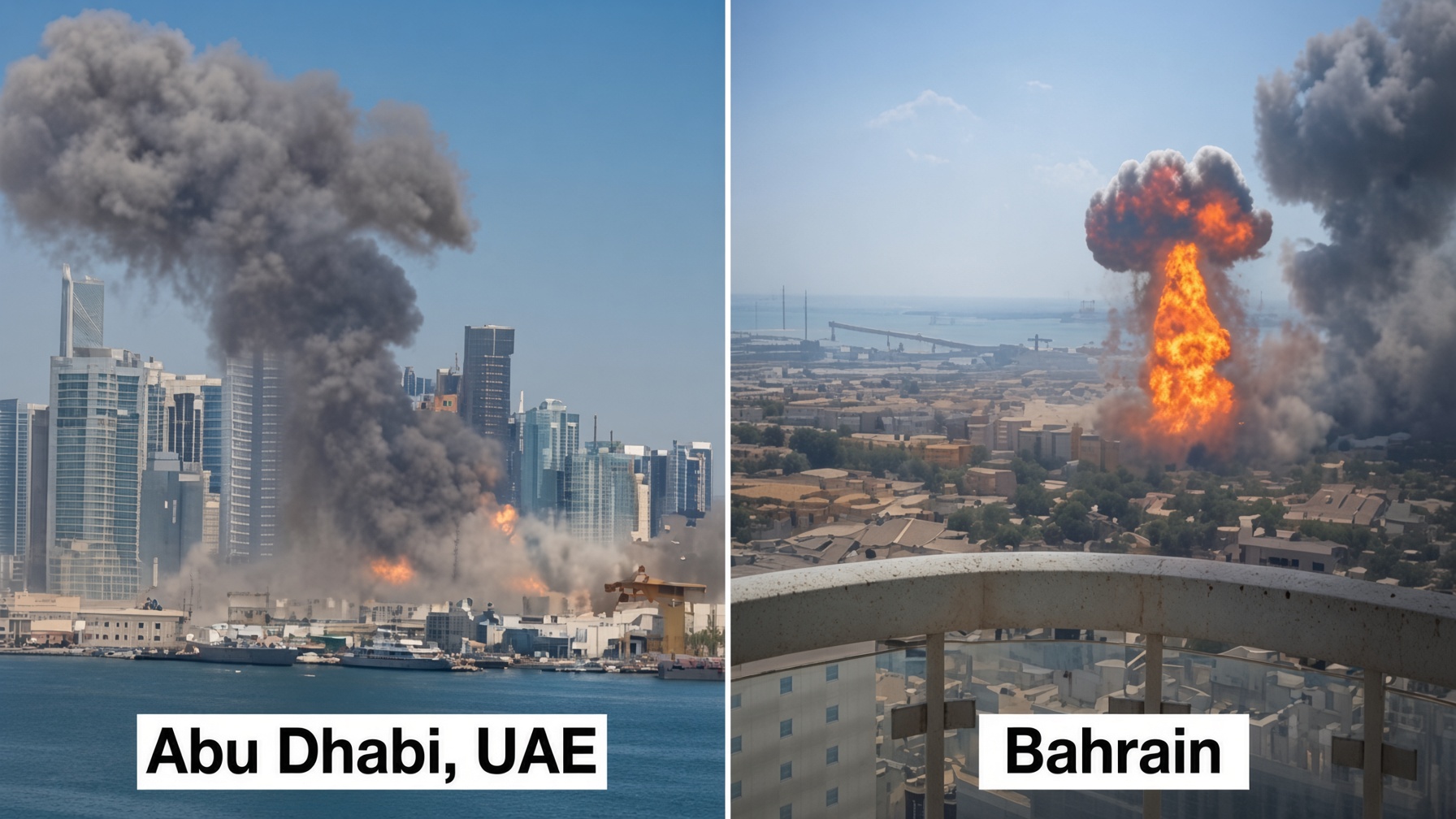
PERSIAN GULF — Regional stability in the Middle East deteriorated sharply today as Iran launched a coordinated wave of missile and drone attacks targeting installations hosting U.S. military forces across several Gulf nations. The unprecedented escalation triggered a frantic response from air defense systems, widespread emergency alerts, and a dramatic hardening of security postures in multiple pro-Western Gulf monarchies.
This dangerous new chapter in the long-standing U.S.-Iran confrontation has shattered the uneasy calm of the region, emphasizing how readily the conflict can expand beyond Iran’s borders. American forces, which maintain a substantial footprint in Bahrain, Qatar, Kuwait, and the United Arab Emirates (UAE), are on the highest possible alert, as their strategic presence renders these host countries primary targets during escalatory phases.
UAE Defenses Engaged
In the United Arab Emirates, the silence of the early hours was broken by thunderous explosions echoing across Abu Dhabi. Witnesses, including correspondents from Reuters, reported multiple powerful detonations shaking the capital, concentrated in areas near Al Dhafra and Bateen.
Initial reports confirm that UAE air defense assets were aggressively engaged in intercepting incoming aerial threats. Al Dhafra Air Base, located critical miles from the capital, serves as a hub for U.S. military operations and is known to be a target in the Iranian crosshairs. While the skies illuminated with interceptions, independent verification of potential impact or damage on the sensitive installation is still pending as damage assessments continue in the volatile environment.
The UAE is already hyper-vigilant regarding its critical systems. This incident follows a report by Reuters in September that detailed how earlier Iranian-attributed attacks had successfully compromised technological infrastructure in both the UAE and Bahrain, forcing a comprehensive review of the nations’ protective protocols for vital utilities against low-flying drones and ballistic missiles.
Bahrain and Qatar Bracing for Impact
The small island kingdom of Bahrain, the strategically vital headquarters of the U.S. Navy’s Fifth Fleet, found itself directly in the fray. Manama, the capital, is home to a significant American military and administrative presence, placing the kingdom at the heart of the regional tensions.
Iran has explicitly claimed responsibility for strikes directed at U.S. Navy facilities in Bahrain, particularly sites near Jufair and Sheikh Isa. During this latest volley, Bahraini emergency services activated air raid sirens, plunging the population into high-stress precautionary measures as defensive systems responded to the incoming barrage. Verification of Tehran’s claims is ongoing.
To the north, Qatar also faced direct threats. Al Udeid Air Base, a massive installation serving as a regional command hub for the U.S. military, was an active focal point. Iranian forces claimed successful attacks on assets within Al Udeid, while Qatari air defenses were seen intercepting multiple incoming projectiles, highlighting the multi-front nature of the offensive.
Kuwait and Global Implications
Kuwait, too, reported being targeted. Its military confirmed that defensive systems engaged an onslaught of ballistic missiles, cruise missiles, and suicide drones directed at facilities supporting U.S. personnel. Authorities have implored the civilian population to remain cautious and follow emergency protocols as they navigate this serious security challenge.
Beyond the immediate tactical situation, the cascading attacks have severe geopolitical and economic consequences. The primary immediate concern centers on the Strait of Hormuz, the world’s most critical maritime energy artery. A substantial portion of global oil and gas shipments passes through this narrow waterway.
Military activity of this scale around the strait is guaranteed to disrupt maritime traffic. Reuters has previously documented that shipping volume through the waterway has already fallen sharply during recent years of heightened conflict. Further instability around Hormuz poses a systemic risk to global energy supplies and pricing.
With diplomatic channels seemingly blocked and military maneuvers dictating events, the entire Persian Gulf remains on a razor’s edge. Further analysis is expected as officials continue to quantify the damage, monitor the skies for subsequent threats, and brace for potential retaliatory responses from Washington.
🔥BREAKING NEWS… 4 countries join forces to atta…