WASHINGTON — A fragile, days-old ceasefire between Washington and Tehran teetered on the brink of collapse after U.S. forces launched a series of retaliatory airstrikes across Iran, prompting President Donald Trump to issue an existential warning to the Iranian government over renewed attacks on commercial shipping in the Persian Gulf.
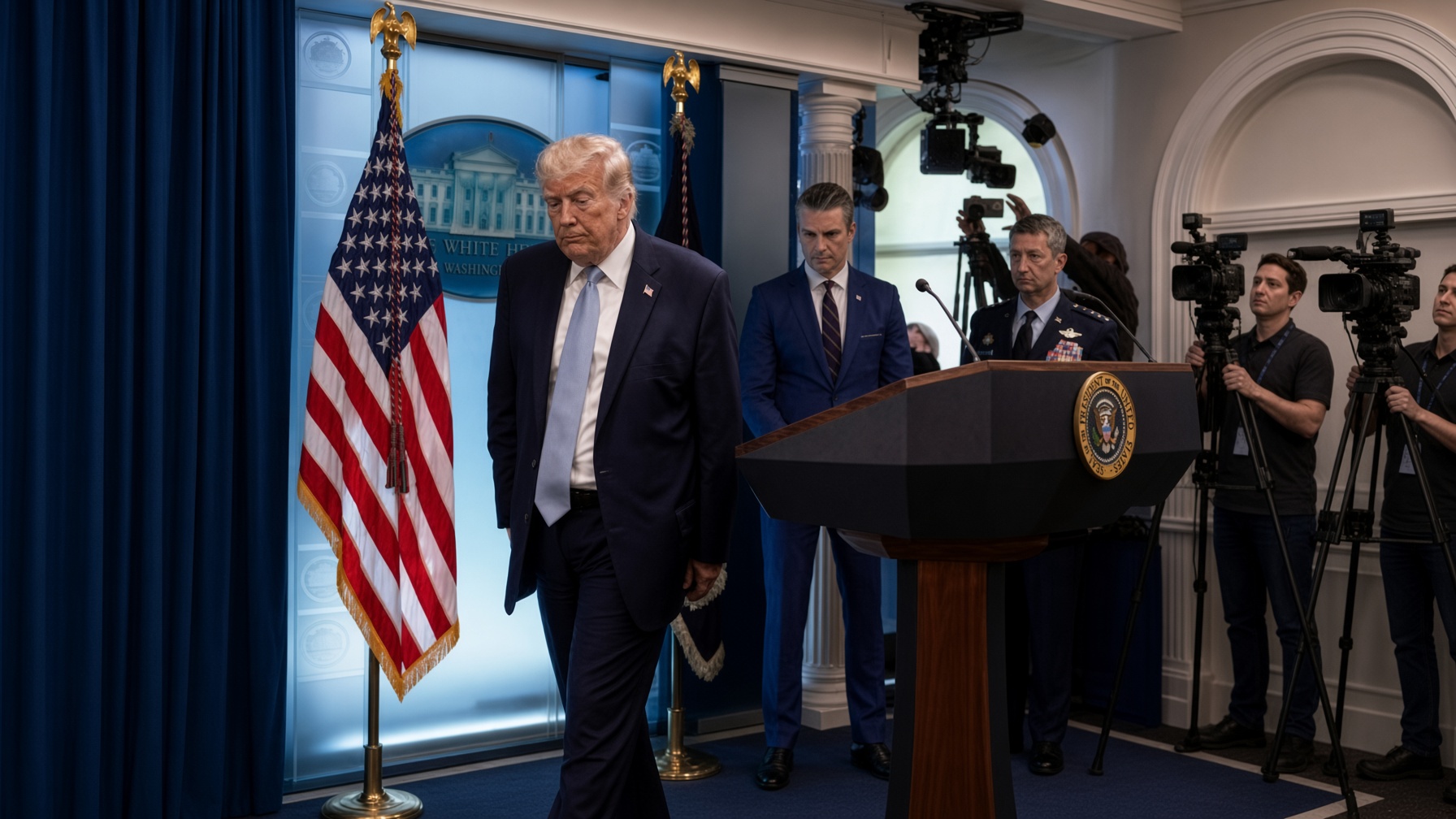
Writing on Truth Social, Trump warned that continued disruptions to maritime corridors would invite overwhelming American force, threatening that Washington was prepared to “complete the job” if Tehran did not immediately halt operations against international commercial vessels.
“If that becomes necessary,” Trump wrote, the Islamic Republic of Iran “could cease to exist.”
Escalating Military Response
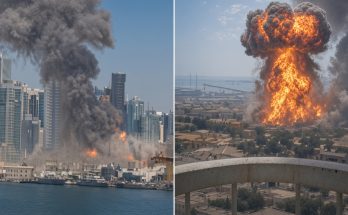
The escalating rhetoric followed an announcement by U.S. Central Command detailing coordinated airstrikes on June 27 against multiple Iranian military installations. According to defense officials, American aircraft struck missile and drone storage facilities, coastal radar installations, command-and-control communications nodes, air-defense batteries, and specialized mine-laying assets along Iran’s southern perimeter.
Retaliation in the Strait
The Pentagon framed the kinetic strikes as a direct response to a pair of unmanned aerial assaults against international merchant vessels transiting the Strait of Hormuz—the vital maritime artery through which roughly a fifth of the world’s petroleum passes.
The latest incident occurred at approximately 4:30 a.m. Eastern Time, when an Iranian one-way attack drone struck the M/T Kiku, a Panama-flagged crude tanker transporting more than two million barrels of oil. While the vessel sustained damage, no catastrophic spill or crew casualties were immediately confirmed.
That attack came in close succession to a prior drone strike on the M/V Ever Lovely, a Singapore-flagged container vessel transiting waters off the Omani coastline. While the initial wave of U.S. retaliatory sorties specifically targeted the coastal radar and launch infrastructure tied to the Ever Lovely incident, the strike on the M/T Kiku triggered a broader, pre-planned package aimed at degrading Iran’s asymmetrical naval capabilities.
CENTCOM stated that American assets in the region would sustain defensive maritime patrols to safeguard the shipping lane and protect commercial crews navigating the corridor.
A Fractured Diplomatic Framework
The confrontation directly imperils a landmark, yet precarious, diplomatic agreement brokered on June 17. The bilateral memorandum of understanding established an immediate cessation of formal military operations between the two adversaries and outlined a 60-day window to negotiate a permanent security framework.
Crucially, the agreement stipulated that Tehran would deploy its best efforts to guarantee unhindered transit for commercial shipping through the Strait of Hormuz throughout the negotiation period.
Washington contends that the drone strikes represent material breaches of the armistice, compelling a military response to maintain deterrence. Tehran, meanwhile, has historically maintained that Western naval presence destabilizes regional security, though Iranian officials have not formally claimed responsibility for the individual drone launches against the two foreign-flagged tankers.
The resulting impasse underscores the inherent structural fragility of the June 17 agreement, which lacked explicit operational arbitration mechanisms to manage gray-zone provocations or non-state proxy activities during the 60-day interim.
Energy Shocks and Political Stakes
The maritime crisis immediately reverberated across global financial desks. Because the Strait of Hormuz represents an indispensable chokepoint for international crude and liquefied natural gas, any prolonged militarization of the waterway carries immediate risk for global energy benchmarks, consumer gasoline prices, and baseline inflation.
Trump has anchored substantial political capital to domestic energy stability and the safe restoration of maritime trade lanes, arguing that swift kinetic deterrence is essential to shielding domestic consumers from overseas supply shocks.
The administration’s foreign policy balancing act unfolds against a polarized domestic backdrop. A recent Daily Mail/J.L. Partners survey indicated Trump’s job approval rating stood at 47%, with 53% disapproving—a modest improvement over previous polling benchmarks by the same firm, though views remain sharply divided along partisan lines regarding the administration’s handling of volatile international crises.
With diplomatic channels strained and military forces on high alert throughout the Gulf, the coming days will serve as a definitive test of the June 17 framework. Should low-intensity attacks on commercial shipping persist, both capitals risk sliding from managed retaliatory exchanges into the very open-ended regional conflict the ceasefire was designed to avert.