WASHINGTON — A sudden eruption of gunfire outside the main ballroom of the Washington Hilton abruptly halted the annual White House Correspondents’ Association dinner on Saturday night, triggering an emergency evacuation of the President, high-ranking administration officials, and hundreds of media luminaries.
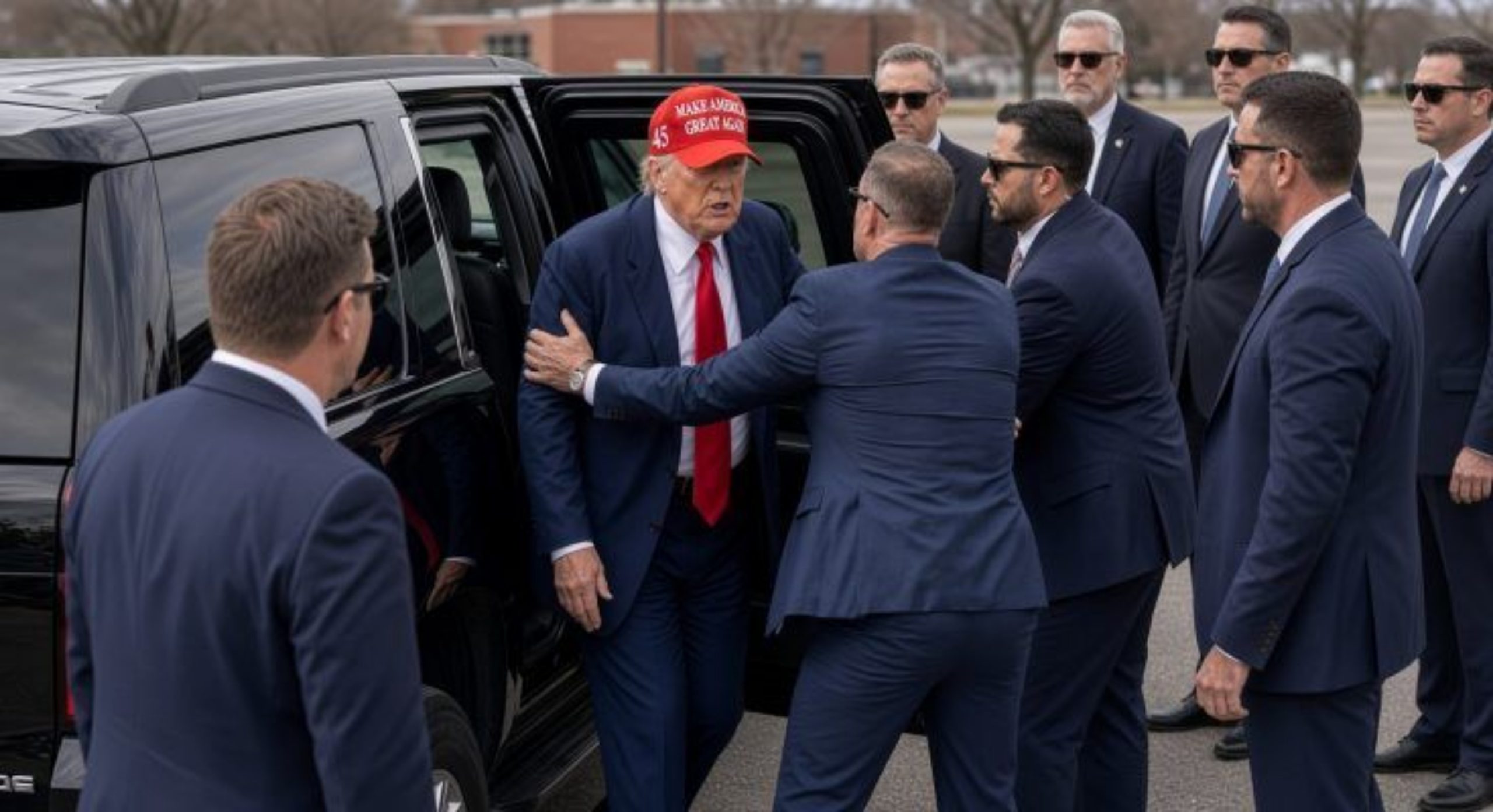
The black-tie gathering, long regarded as the nation’s premier intersection of political power, entertainment, and journalism, descended into pandemonium moments after the program got underway. A confrontation in a nearby corridor left a U.S. Secret Service agent wounded by close-range gunfire and forced security personnel to sweep President Donald Trump, First Lady Melania Trump, and senior aides out of the venue under heavy tactical guard.
Witnesses described an immediate shift from celebratory banter to shock as armed tactical teams rushed the ballroom perimeters. Among the officials rapidly escorted to fortified motorcades were White House Press Secretary Karoline Leavitt, several cabinet members, and senior congressional leadership.
Metropolitan Police Department Interim Chief Jeffrey Carroll confirmed in a late-night press briefing that law enforcement officers subdued and arrested the shooter on site. Carroll stated investigators believe the suspect was an isolated individual who had obtained access as an official guest of the hotel, significantly narrowing the tactical scope of the incident.
“At this point in our preliminary inquiry, this appears to be the act of a lone actor,” Carroll said, noting there was no ongoing threat to the surrounding neighborhood or district infrastructure.
Federal authorities confirmed that a Secret Service protective detail member sustained a direct gunshot wound during the initial confrontation. Speaking to reporters following the incident, Trump stated the agent had been struck by a “very powerful gun,” adding that the officer avoided critical injury because the bullet struck their protective tactical vest.
Trump praised the security detail’s aggressive intervention, commending the Secret Service and local police for their rapid neutralization of the gunman before the confrontation could spill directly into the seated hall of nearly 3,000 guests.
The violence halted a 105-year-old tradition celebrated colloquially across the capital as the “nerd prom.” While event organizers initially paused proceedings with the hope of restoring order and resuming the evening’s keynote speeches, logistical and safety considerations ultimately forced an abandonment of the schedule.
At 9:45 p.m., the White House Correspondents’ Association announced that the remainder of the evening was officially canceled.
Trump revealed afterward that he had pushed security advisers to allow the gala to continue, noting he had been prepared to deliver an extensive and pointed address assessing the press corps. Organizers confirmed that discussions are underway to reschedule the event within the next 30 days.
Reflecting on the harrowing exit, Trump struck an unusually conciliatory tone, observing that the sudden peril forged a rare moment of solidarity across deep ideological lines.
“The event is dedicated to the freedom of the press, and it managed to bring together people who often strongly disagree,” Trump said. He described the shared experience of the room under threat as “very beautiful,” praising the composure of the journalists, lawmakers, and dignitaries caught in the lockdown. “A shared danger reminded everyone of our common ground, and the poise shown throughout the room was remarkable under terrifying circumstances.”
The incident marks one of the most severe perimeter breaches at an executive-attended event in the District of Columbia in decades. The Washington Hilton, historically nicknamed the “Hinckley Hilton” after the 1981 assassination attempt against President Ronald Reagan outside its lower-level exit, once again finds its architecture and event protocols under intense federal examination.
Federal law enforcement agencies, in coordination with the Secret Service and District police, have initiated an urgent review of access controls, screening checkpoints, and credentialing processes inside major private convention venues hosting protected officials.
Investigators spent early Sunday morning processing forensic evidence from the corridor, interviewing hotel personnel, and reviewing security footage to establish how the armed suspect evaded outer detection layers to reach the perimeter of one of the world’s most heavily secured rooms.